
In November 2014, Marrakech hosted the Global Entrepreneurship Summit, co-organized with the United States. Vice President Joe Biden led the American delegation. Nearly 4,000 participants from dozens of countries attended. At the summit, the Moroccan Minister of Economy and Finance announced a World Bank project involving a $50 million loan to support financing for innovative startups and small and medium enterprises in Morocco. Separately, the United States announced plans for approximately $50 million in public-private partnerships focused on vocational and technical training for young Moroccans. On opening day, I published an article in L’Economiste titled “Promoting Real Entrepreneurship in Morocco.” My argument: there seemed to be far more people promoting entrepreneurship in Morocco than actually doing it. We were spending more money talking about entrepreneurship than entrepreneuring.
Eleven years later, the diagnosis hasn’t changed much.
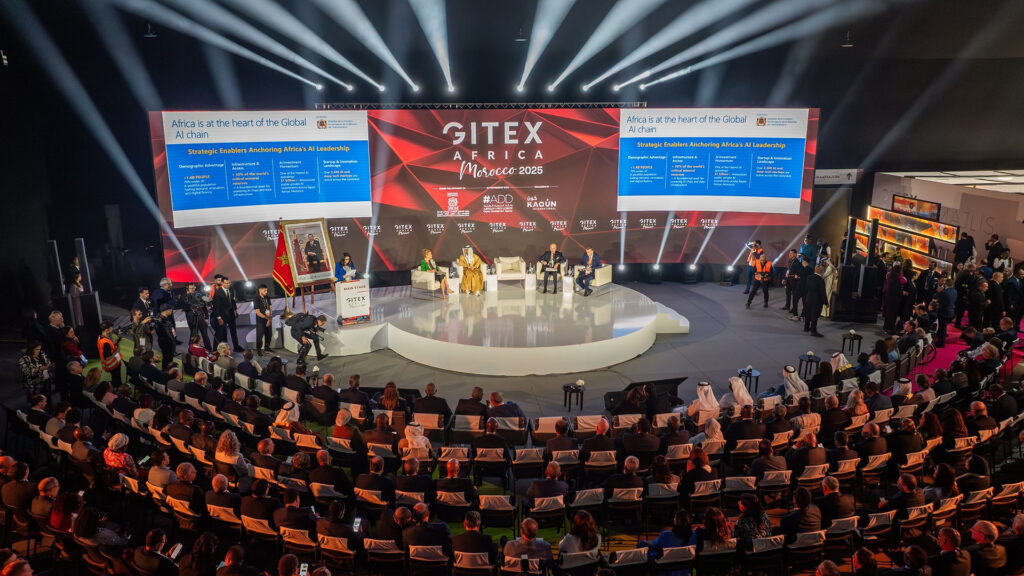
Since 2023, Morocco has hosted GITEX Africa, now the largest tech event on the continent. The 2026 edition, scheduled for April 7–9 in Marrakech, expects more than 55,000 attendees, 1,500+ global exhibitors and startups, and nearly 400 active investors. The government’s “Morocco 300” program covers 95% of participation costs for 300 selected startups, up from 200 the previous year. Once again, the organization is impeccable.
But the numbers that matter tell a different story.
In 2025, Moroccan startups raised approximately $58 million according to Africa: The Big Deal tracking, placing the country 7th in Africa. This followed stronger 2024 performance, when Moroccan startups raised nearly $95 million across about 40 deals, nearly tripling the prior year and briefly lifting Morocco to 6th place continentally. Yet concentration remains high: in recent years, a handful of deals have driven the bulk of capital. Only four meaningful exits have been recorded in the past three years, compared to over twenty in Egypt.
Compare this with peers. Kenya raised close to $984 million ($1.04 billion in 2025 alone) and has accumulated well over $3 billion in startup funding in recent years, despite a lower GDP per capita. Senegal, with nominal GDP per capita around $1,900–1,921, raised approximately $157 million in 2025, largely driven by a major debt round. As of early 2026, Morocco has been largely absent from major continental funding announcements, even as parts of the African ecosystem show signs of rebound.
What struck me most personally: Last November, I attended the Africa Startup Festival in Lagos. In February, I was at The Startup Summit in Nairobi. At both events, I was the only visitor from Morocco. We host the largest tech event in Africa, yet we are virtually absent from the startup conversations happening in the continent’s two most dynamic entrepreneurial capitals. We invite the continent to our showcase but don’t show up at theirs. This asymmetry says more about our approach to entrepreneurship than any GITEX keynote ever will.
This gap between the showcase and the substance is not unique to entrepreneurship. It is a national pattern. We excel at hosting world-class events, from the WTO and IMF/World Bank meetings to the Global Entrepreneurship Summit, COP22, and now GITEX Africa, and we do it well. What we do less well is the unglamorous, sustained work that must follow: genuinely simplifying the business environment, enforcing prompt payment terms that currently strangle young companies’ cash flow, building a deeper local venture capital market, and creating conditions that encourage talented Moroccan founders to build (and stay) at home rather than relocate abroad.
We have turned entrepreneurship into a spectacle. We have staged it, celebrated it, and subsidized it with booths and badges. But a trade show, however large, is not an ecosystem. An exhibitor badge is not a purchase order. And a photo opportunity with an investor is not a term sheet.
The question I raised in 2014 remains unanswered: when will we move from celebrating entrepreneurship to doing it at scale, with measurable outcomes, more diverse and consistent funding, more exits that recycle capital, stronger local investor participation, and fewer founders voting with their feet?
GITEX Africa is a fine event. It deserves to exist and brings valuable visibility. But we should not mistake the buzz of a three-day convention for the health of an ecosystem. One fills a conference hall. The other builds an economy.